Coral Reefs

Indo Coral Conservation

indo coral conservation logo

Topics include: Capacity Building/Training; Conservation; Coral Reefs

Country/Region: Indonesia

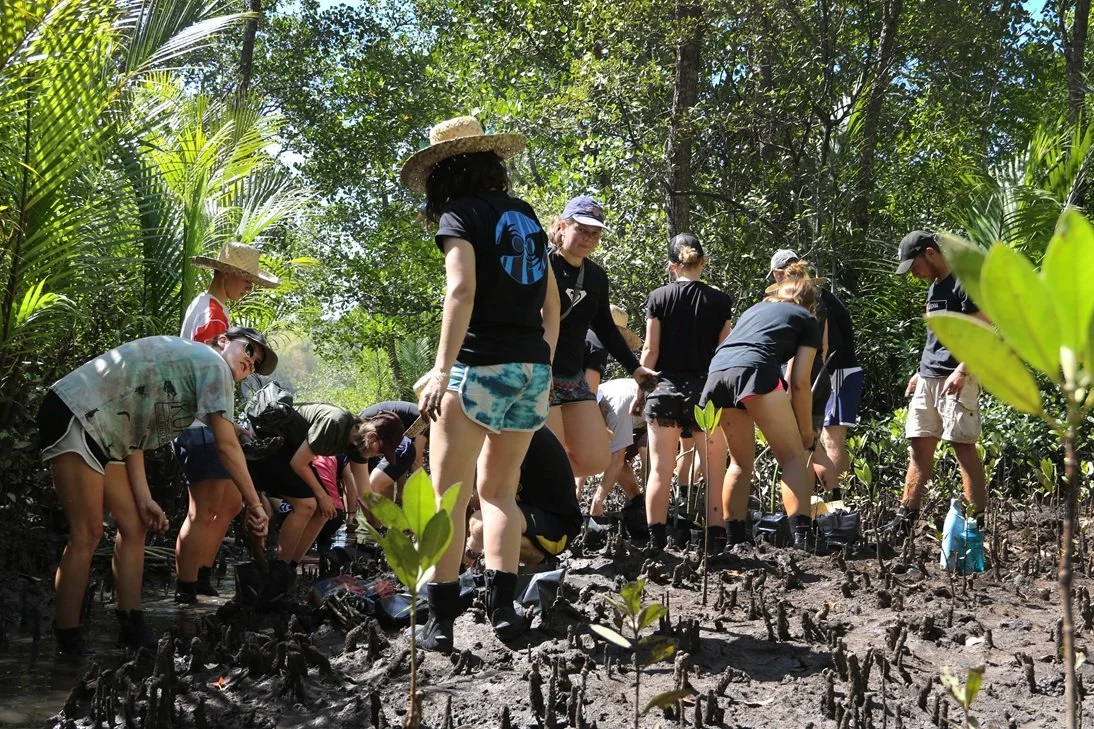
Indo Coral Conservation: Community-Based Marine Conservation in Indonesia Indo Coral Conservation is a dedicated marine conservation initiative based in North Lombok, Indonesia. We’re a small, hands-on team focused on coral reef restoration, ecological monitoring, and environmental education — not flashy campaigns or empty slogans.

Our work is rooted in action. From restoring damaged reef zones to training local youth and hosting international interns, we aim to make a real impact on the marine ecosystems of the Gili Islands. We believe that responsible tourism and community involvement are key to long-term reef protection.

As a grassroots organization, we’re deeply connected to the local environment and culture. We show up daily to plant corals, collect data, and share knowledge — quietly but consistently.

We understand that earning trust takes time. That’s why we operate with transparency, humility, and purpose. No exaggerated claims — just real conservation work, built on collaboration and care.

Links

Tropical Research and Conservation Centre (TRACC-Borneo)

Topics include: Coral Reefs; Ocean Literacy; Restoration/Rehabilitation; Sea Turtles

Country/Region: Borneo

The Tropical Research And Conservation Centre (or TRACC), is a marine conservation organization based in the Celebes Sea dedicated to protecting sea turtles and restoring coral reefs destroyed by the local fish bombing practices of Malaysia.

Links

ReefWatch Marine Conservation

Topics include: Conservation; Coral Reefs

Country/Region: India

ReefWatch has served on the National Board for Wildlife, Government of India. We have had the privilege of working with many dedicated and inspiring individuals in the fields of science, government, filmmaking, photography and the media. Our efforts are targeted towards protecting and nurturing the diversity of life in India’s coastal and marine environments. We currently have projects in Karnataka, Goa, Gujarat and the Andaman Islands.

Links

Reef Restoration Foundation

Topics include: Coral Reefs; Restoration/Rehabilitation

Country/Region: Australia

We are the forerunners of assisted reef adaptation on the Great Barrier Reef In early 2016, record ocean temperatures led to intense and widespread coral bleaching in the northern third of the Great Barrier Reef. In early 2017, it happened again, this time in the central third of the Great Barrier Reef. The unprecedented back-to-back mass coral bleaching events was then compounded in March 2017 by Category 5 Tropical Cyclone Debbie.

In May 2017, the Reef Authority convened a Reef Summit where it was concluded that the frequency and severity of disturbances required a different approach to management. A key outcome was to permit intervention in the natural process of recovery.

Resilient Reefs, then known as Reef Restoration Foundation, incorporated on 11 July 2017 and secured the first permit on 13 October 2017. We installed the first ocean-based multi-species coral nursery on the Great Barrier Reef at Fitzroy Island on 7 December 2017.

Links

Reef Renewal Foundation Bonaire

Topics include: Capacity Building/Training; Coastal Communities; Coral Reefs; Ocean Literacy; Restoration/Rehabilitation

Country/Region: Bonaire

Our mission is to help protect, replenish, and restore the biodiverse coral reefs of Bonaire. We focus on implementing innovative, science-based programs that expand and strengthen populations of keystone coral reef species. We do this so that the reefs of Bonaire can gain the necessary scale, genetic diversity, and resilience to thrive today and in the uncertain, ever-changing conditions of the future.

Links

Reef Relief

reef relief logo

Topics include: Coral Reefs; Environment/Sustainability; Ocean Literacy

Country/Region: North America-Wide

Reef Relief, a nonprofit membership organization founded in 1986, is dedicated to improving and protecting our coral reef ecosystem through education and conservation. Reef Relief’s Coral Reef Conservation Program (CRCP) places a special focus on youth education as an important, initial step in saving endangered marine ecosystems. Our Discover Coral Reefs School Program offers over a dozen marine science topics taught in interactive classroom presentations supplemented with question-and-answer sessions and related activities. These lessons teach students the value and importance of our marine ecosystems, the organisms in them, as well as ways to be positive environmental stewards. Annually, this program reaches over 15,000 students from all over the world through our in person and virtual opportunities. These lessons are provided for free as part of our “Marine Science for All” initiative to make marine science more accessible. In addition to our live classroom visits, our educational programming also includes a virtual classroom where students can work at their own pace through eight marine science focused units. The lessons in each unit are paired with original worksheets, at home experiments, arts and crafts activities, and interviews with marine scientists.

Reef Relief also offers unique educational opportunities through our Coral Camp for Kids and Reef Explorer Coral Camp Programs. Coral Camp is a fun, engaging environmental camp that expands the knowledge of youths ages 6-12 in a variety of marine science topics through lessons, games, and crafts at the Reef Relief Environmental Center in tandem with daily field trips including four days of snorkel excursions in the Florida Barrier Reef. Reef Explorer Coral Camp is designed for the aspiring marine scientist aged 10-14. Over the course of the week, campers practice collecting scientific data and observe various marine ecosystems during two days in Key West and three days camping at the Dry Tortugas National Park to compare the anthropogenic factors affecting both areas. These camp programs reach over 250 children per summer. Scholarships are provided for youths to attend whose families suffer from financial hardship.

The Reef Relief Environmental Education Center teaches the public about marine ecosystems, the threats they face, and ways to protect them. Reef Relief provides additional outreach by distributing educational brochures on safe practices for boaters, snorkelers, divers, and fishermen. We offer these to Chambers of Commerce, resorts, hotels, marinas, dive shops, boat charters, and visitor centers throughout the Florida Keys. Our website, www.reefrelief.org, is an extensive coral reef education resource that is visited by thousands of people per month. We also educate a growing network of over 100,000 people through social media platforms.

We engage the community in active ocean stewardship by partnering with other nonprofit organizations, government agencies, learning institutions, and businesses. This includes recruiting volunteers for our Stormwater Education Campaign, marine debris removal events, Plastics Free Key West, and Protect Your Skin, Protect Our Reefs safe sunscreen education effort.

Links
Reef Environmental Education Foundation (REEF)

Topics include: Alien or Invasive Species; Coral Reefs

Country/Region: Caribbean; Indian Ocean-Wide; Medeterranian; North America-Wide; Red Sea

Reef Environmental Education Foundation (REEF) is an international marine conservation organization that implements hands-on programs to involve local communities in conservation-focused activities. REEF was founded in 1990 and is based in Key Largo, Florida, with additional staff in Illinois, California, Washington, Colorado, New Jersey, and North Carolina. Its mission is to protect biodiversity and ocean life by actively engaging and inspiring the public through citizen science, education, and partnerships with the scientific community.

REEF's work focuses on four main projects: the Volunteer Fish Survey Project, the Grouper Moon Project, the Invasive Species Program, and the Ocean Explorers Education Program. Visit the program pages in the menu above for more information on each.

Links

Reef Doctor

Topics include: Capacity Building/Training; Coastal Communities; Coral Reefs; Ocean Literacy; Restoration/Rehabilitation

Country/Region: Madagascar

We marry conservation with social development by facilitating sustainable livelihoods and education as a countermeasure to over-exploitation. Our goal is to protect both marine and coastal habitats, and provide a self-sustaining pathway to poverty alleviation in the impoverished rural communities of Southwest Madagascar. We have worked in the Bay of Ranobe for 20 years, establishing long-standing harmony and effective partnerships with local communities.

Links

Reef Check Indonesia

Topics include: Capacity Building/Training; Coastal Communities; Conservation; Coral Reefs

Country/Region: Indonesia

Dedicated to empowering people to improve coastal community welfare through integrated coastal and marine ecosystem management. Reef Check itself spawned from a conservation initiative in 1997, where volunteers were actively involved in monitoring Indonesia’s coral reefs. The RCFI was founded in 2005 and is part of Reef Check International, the largest coral reef conservation network, spanning over 90 countries in the world. Works with 3-pillars: Collaborative Management, Education-Awareness, and Science-Technology, which is implemented into the program of Inclusive Conservation, Empowering Community, and Science for Equitable Development.

Links

Misool Foundation

Topics include: Conservation; Coral Reefs

Country/Region: Indonesia

Misool Foundation is the registered charity arm of the private island resort, Misool. Based in Raja Ampat, Indonesia, our joint mission is to safeguard the most biodiverse reefs on Earth through the empowerment of local communities, providing a structure by which they are able to reclaim their traditional tenureship of reefs.

The Misool Foundation team manages a suite of conservation programmes which combine marine governance, waste management, community empowerment and species conservation.

We protect the most biodiverse marine environments on earth while consistently delivering measurable conservation results.

Links

Marine Conservation Society Seychelles

Topics include: Conservation; Coral Reefs; Ocean Literacy; Restoration/Rehabilitation; Sea Turtles

Country/Region: Seychelles

The Marine Conservation Society Seychelles (MCSS) is a Non-Governmental Organisation registered in Seychelles which promotes the conservation of the marine environment through education, research and the implementation of a number of programmes. Current activities include long running monitoring programmes on turtles and terrapins, coral restoration as well as several grant funded programmes and projects.

Most of our projects are supported by volunteer effort and several are funded through sponsorship by local businesses, associations and individuals.

Links

Marine Conservation Philippines

Topics include: Coral Reefs; Environment/Sustainability; Policy/Governance

Country/Region: Philippines

Marine Conservation Philippines (MCP) is a non-governmental organization dedicated to protecting and preserving marine ecosystems through research, education, and community engagement. Based in the Philippines, one of the world's most biodiverse marine regions, MCP addresses critical environmental challenges, working to restore ocean health while empowering communities to become stewards of their natural resources.

The organization’s mission is multifaceted, encompassing initiatives such as scientific research, policy advocacy, marine protected area (MPA) management, and environmental education. By fostering collaboration with local stakeholders, MCP works tirelessly to develop sustainable solutions to pressing marine issues, including overfishing, coral reef degradation, and the impacts of climate change.

At the heart of MCP's operations is its groundbreaking volunteer-based citizen science program. This initiative invites individuals from around the globe to contribute directly to meaningful marine conservation efforts. Volunteers join a dynamic, hands-on program that blends scientific training, underwater research, and community outreach. With expert guidance, participants become active contributors to data collection and analysis that informs critical decisions about marine resource management.

This citizen science program is more than just an opportunity to learn about marine biology and ecology—it’s a chance to make a tangible difference. Volunteers assist in a wide range of tasks, from conducting reef health surveys and biodiversity assessments to mapping habitats and monitoring fish populations. These efforts are vital in evaluating the effectiveness of MPAs and identifying areas that require additional protection or restoration.

By involving volunteers in its work, MCP bridges the gap between science and society, transforming passion for the environment into action. Participants leave not only with newfound skills and knowledge but also with a deep understanding of the challenges facing our oceans and the role they can play in addressing them.

Beyond citizen science, MCP undertakes a variety of other impactful initiatives. The organization actively collaborates with local government units, fisherfolk, and other community stakeholders to design and implement effective MPAs, ensuring these sanctuaries deliver both ecological and socioeconomic benefits. MCP also conducts capacity-building programs for local communities, equipping them with tools and knowledge to sustainably manage their marine resources.

Education is another cornerstone of MCP’s approach. The NGO runs workshops, seminars, and youth programs that raise awareness about environmental issues and inspire a new generation of conservationists. In addition, MCP engages in outreach efforts aimed at reducing plastic pollution, promoting sustainable fishing practices, and advocating for stronger environmental policies at regional and national levels.

MCP’s holistic approach to marine conservation reflects the interconnectedness of ecosystems, economies, and communities. Whether through the work of dedicated volunteers, collaborations with local stakeholders, or education programs, the organization strives to create lasting positive change.

By joining Marine Conservation Philippines, you don’t just witness the beauty of the underwater world—you become a part of its protection. Every dive, every survey, and every conversation contributes to a larger vision: thriving oceans that support both biodiversity and resilient coastal communities.

For those passionate about making a difference, MCP’s citizen science program offers a unique opportunity to be on the frontlines of marine conservation, ensuring the ocean’s future for generations to come.

Links

Marine Conservation Institute (MCI)

Topics include: Conservation; Coral Reefs; Deep Sea

Country/Region: Global

The ocean is the Earth’s biggest life support system, and healthy marine ecosystems are essential for human survival and well-being. As a leader in the global movement to protect vast ocean areas, Marine Conservation Institute uses the latest science to identify important marine ecosystems, advocate for their protection, and measure progress toward effective, sustainable marine protection. Our priority is to help create an urgently-needed worldwide system of Blue Parks, or recognized highly protected areas, to ensure the future diversity and abundance of marine life. To encourage meaningful progress and accurately reflect the current state of marine protection, we also developed and actively maintain the world’s most comprehensive online marine protected area database, the Marine Protection Atlas.

Since starting as the vision of one person in 1996, Marine Conservation Institute has become an influential voice in the global fight to save our ocean. We are an active member of the High Seas Alliance, Deep Sea Conservation Coalition, Coral Reefs of the High Seas Coalition, and National Ocean Protection Coalition, working to defend and advance marine protection at home and abroad.

As a founding member of the California Seamounts Coalition, we lead efforts to protect vital deep-sea habitats off the California coast. This work builds on our decade-long effort to conserve coral ecosystems. We also model deep-sea habitats and research their ecosystems to promote protection for these fragile, hard-to-find living treasures.

For 25 years, Marine Conservation Institute has been leading conservation efforts to save our ocean. Growing awareness of threats to our ocean has led to significant expansion of marine protections, but the environmental challenges facing our blue planet are enormous. Your support for our mission is more important now than ever before.

Links

Institute for Marine Research


Topics include: Coral Reefs; Environment/Sustainability; Oceanography; Policy/Governance

Country/Region: Philippines


The Institute for Marine Research (IMR) is a dynamic nonprofit organization dedicated to advancing marine science, conservation, and community education across the Philippines. With a mission to protect marine biodiversity and empower local communities, IMR conducts cutting-edge research, delivers impactful conservation initiatives, and runs inclusive outreach programs that inspire the next generation of ocean stewards.

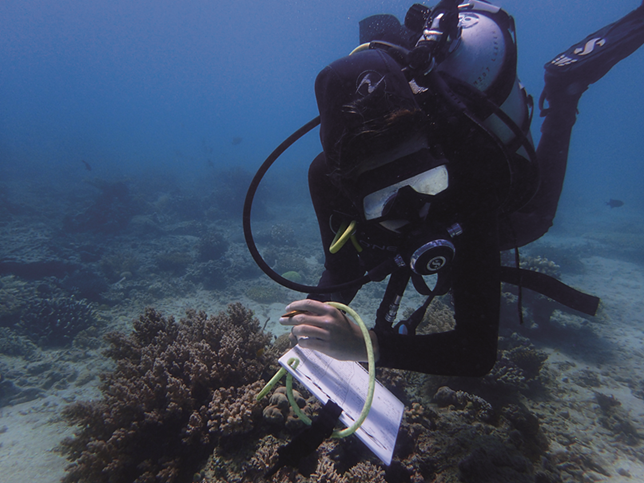
Based in Dauin, Negros Oriental, IMR operates in some of the Philippines’ most biodiverse marine environments. The organization collaborates with scientists, divers, students (including masters and PhD students), and community partners to study reef ecosystems, monitor environmental changes, and restore damaged habitats. IMR’s work includes coral reef surveys using the most high tech monitoring possible. We are big proponents of the digitalization of monitoring systems moving away from old school visual monitoring.

At the heart of IMR’s mission is community engagement. Programs like the Reef Rangers Initiative provide marine conservation training and scuba diving certification for underprivileged youth—especially girls—from local orphanages, equipping them with skills and confidence to become future leaders in ocean conservation.

IMR also partners with schools and resorts to offer marine science clubs, educational workshops, and citizen science projects. Its after-school programs for kids combine fun, hands-on activities with marine ecology lessons, culminating in snorkeling trips to local reefs.

By bridging science, education, and community action, IMR fosters a culture of environmental responsibility while producing valuable data that supports sustainable marine management.

Links

GreenReef

Topics include: Conservation; Coral Reefs; Groupers; Ocean Literacy; Seabirds

Country/Region: Belize

Green Reef is a private, non-profit organization dedicated to the promotion of sustainable use and conservation of Belize's marine and coastal resources. For years, the citizens of San Pedro Town, Ambergris Caye have been aware and concerned about the environmental problems facing the community and surrounding areas.

In June of 1996 this concern led to the founding of Green Reef. As a scientific research and educational organization, Green Reef aims to promote interest in wildlife and conservation of Belize's natural resources among students, teachers, dive guides, fishermen and the general public. Since it's inception, Green Reef has made great strides towards becoming a prominent conservation organization in Belize. Green Reef has become a key player in the conservation field at a time when many threats face the environment of Belize; it is Green Reef's goal to help maintain a balance that allows humans to enjoy this rich resource, while minimizing the impact.

Green Reef is optimistic that through our various programs, activities and the continued support and involvement of the community, we will succeed in meeting this objective.

Links

Global Coral Reef Alliance

Topics include: Coral reefs; Restoration/Rehabilitation

Country/Region: Global

Organization dedicated to scientific research and sustainable management of the most valuable and threatened of all ecosystems—coral reefs.

GCRA is a worldwide coalition of volunteer scientists, divers, environmentalists and other individuals and organizations, committed to coral reef preservation. We primarily focus on coral reef restoration, and cutting-edge research on impacts of coral bleaching, global warming, marine diseases, global sea level rise, and pollution on corals.

GCRA scientists work with community groups, environmental organizations, foundations, governments or private firms to build, restore and maintain coral reefs, nurseries and marine sanctuaries.

GCRA Projects include restoration of coral reefs and marine habitats for mariculture, tourism and shore protection.

GCRA invented and developed Mineral Accretion Technology™ and the Biorock™ method of electrical coral reef and marine ecosystem restoration, the HotSpot™ method to correctly predict coral bleaching from satellite sea surface temperatures, and integrated whole-watershed and coastal zone nutrient management (now commonly referred to as Ridge to Reef, or Hilltop to Ocean).

Founded in 1990, GCRA is the direct heir to a pioneering coral reef research tradition stretching back to the 1920s, and has the world’s largest collection of coral reef photographs from the 1940s, 1950s, and 1960s.

Links

Gili Matra Bersama

Topics include: Capacity Building; Coastal Communities; Conservation; Coral Reefs; Elasmobranchs (sharks, rays, skates and sawfish); Ocean Literacy; Sea Turtles

Country/Region: Indonesia

We are an international marine research center dedicated to ocean conservation, nestled in the stunning Gili Islands of Indonesia. It’s our mission to inspire young people and women to become passionate protectors of our oceans.

Through education, research and community action, we’re working together to restore and preserve marine ecosystems for a healthier planet.

Our diverse research team is comprised of local marine biologists, instructors, entrepreneurs and storytelling specialists, all united by a profound love for the sea and a commitment to driving positive change.

We believe that a strong, diverse community can make a greater impact on marine protection than any single organization. To this end, we collaborate with local governments, stakeholders, national and international partners, and universities around the globe.// It’s our mission to empower youth & women to protect and restore marine ecosystems through education, research, and community engagement. We are dedicated to fostering a sustainable future in Indonesia, where tourism and nature coexist harmoniously. By empowering the next generations, we pave the way for a future where the ocean is respected, protected, and cherished.

Join us as we shape the next generation of conservationists and inspire action through our groundbreaking research and community stories.

Links

Coral Triangle Center

Topics include: Capacity Building; Coastal Communities; Conservation; Coral Reefs; Mangroves

Country/Region: Bali; Indonesia; Malaysia; Maluuku; Papua New Guinea; Philippines; Solomon Islands; Timor-Leste

We are a foundation based in Bali with a regional scope and global impact. We work closely with local communities, private sector, governments, and partners to strengthen marine resource management in the Coral Triangle to protect coral reef ecosystems, ensure sustainable livelihoods, and food security. CTC supports on-the-ground conservation in Nusa Penida in Bali, Banda Islands in Maluku, as well as Atauro Island and Liquica in Timor-Leste. We are developing our Center for Marine Conservation in Bali to serve as an integrated learning space for training programs, outreach activities, and artistic and cultural performances to influence millions of people to care for our oceans and those that depend on it. We lead regional learning networks of women leaders, local government executives and marine protected area practitioners in Indonesia, Malaysia, Philippines, Papua New Guinea, Solomon Islands and Timor-Leste. We are a certified training center of the Government of Indonesia and an official partner of the Coral Triangle Initiative on Coral Reefs, Fisheries and Food Security.

Links

Coral Sea Foundation

Topics include: Conservation; Coral Reefs; Indigenous Knowledge & Stewardship; Ocean Literacy

Country/Region: Australia; Melanesia

Our Mission is to raise awareness of the ecological and social value of the reefs of the Coral Sea, Melanesia and the Great Barrier Reef, and to be proactive in their sustainable management.

Our approach combines science, gender equity, and sustainability with captivating visuals and a compelling social media presence. The Coral Sea Foundation develops pragmatic reef monitoring solutions and works to empower First Nations custodians with the skills and knowledge they need to sustainably manage their own Sea Country.


Links

Coral Reef Alliance

🏷️ Topics include: Capacity Building; Coastal Communities; Conservation; Coral Reefs; Fisheries; Ocean Literacy

📍 Country/Region: Global

We work at local, regional, and global levels to keep coral reefs healthy, so they can adapt to climate change and survive for generations to come. As one of the largest global NGOs focused exclusively on protecting coral reefs, the Coral Reef Alliance (CORAL) has used cutting-edge science and community engagement for nearly 30 years to reduce direct threats to reefs and to promote scalable and effective solutions for their protection.

🔗 Links

//this is lasy summaries //this is to have carousels auto rotate