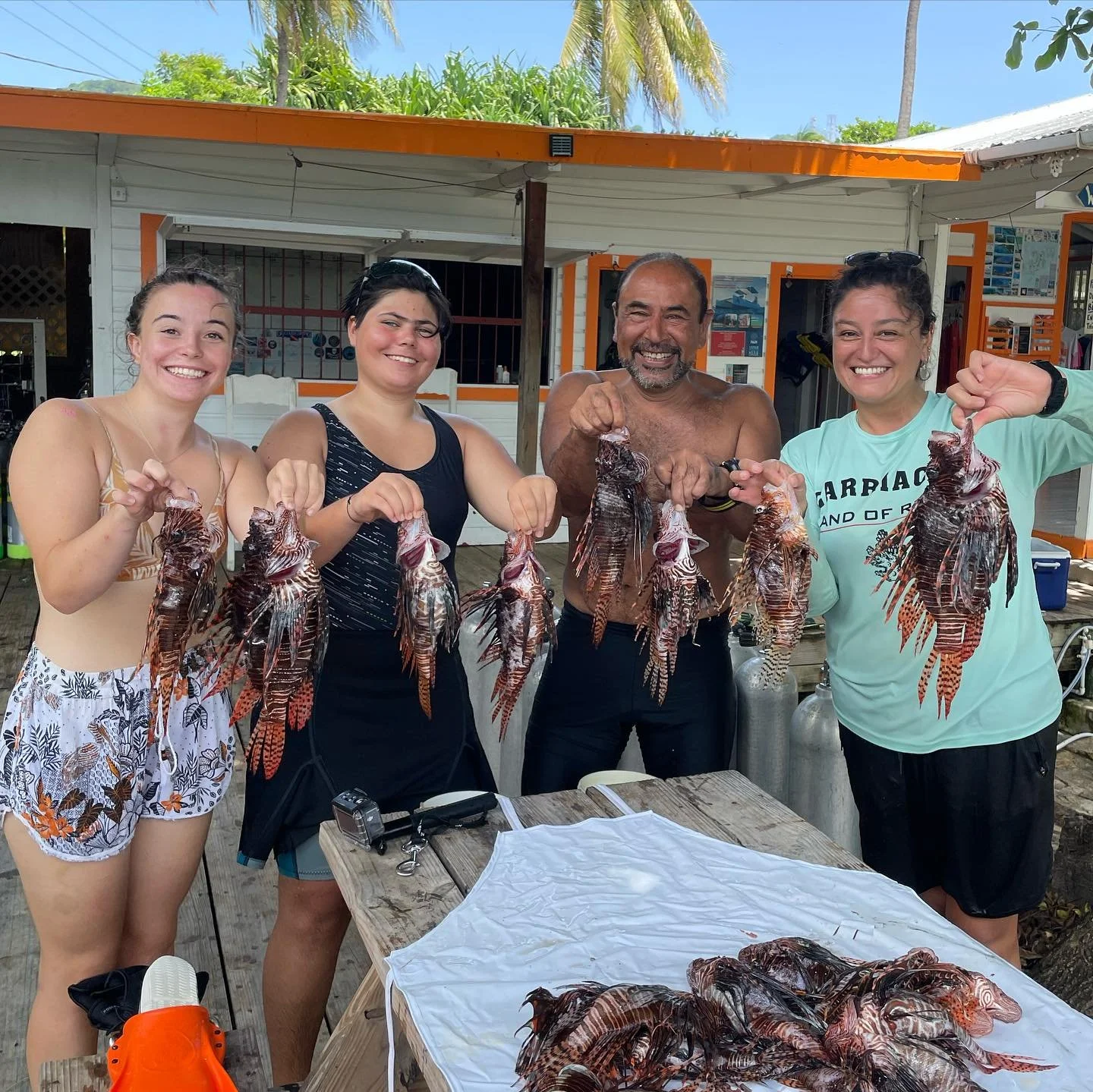
Alien/Invasive Species

Jersey Marine Conservation

Jersey Marine Conservation Logo

Topics include: Alien or Invasive Species; Archaeology/Heritage; Climate Change; Coastal Communities; Conservation; Environment/Sustainability; Ocean Literacy; Rocky reefs; Wildlife rescue

Country/Region: Jersey


We are Jersey Marine Conservation – run by volunteers, a proactive, legally registered and a Government of Jersey approved Charity.

Our team strives to protect our marine environment primarily by gathering data in support of marine protection, on-going bio-diversity recording and associated research. As equally important, we engage the community through the Marine Watch schools program, in why Marine Conservation is so important, ensuring that our surrounding seas are valued, looked after and managed, to provide a healthy marine environment that functions as a living organism and a sustainable resource.

The organisation is based in Jersey, Channel Islands and began as Jersey Seasearch in 2012. Our Island is a Crown Dependency with our own Government, laws, customs and unique identity. The marine environment is not protected effectively by UK laws or International treaties. No species living in our territorial waters are fully protected from over exploitation or harm. Even marine mammals, such as Seals and Dolphins, have little in the way of habitat legislation to safeguard their existence. We have won numerous awards for our work including the only Association of Jersey 50th Anniversary Award, UK National Biodiversity Marine Award, Insurance Corporation Award in 2014 and 2022.

Links

Seychelles Islands Foundation

Topics include: Alien or Invasive Species; Conservation; Ocean Literacy

Country/Region: Seychelles

The Seychelles Islands Foundation (SIF) is a non-profit charitable organisation that was established as a public trust by the government of Seychelles in 1979. SIF manages and protects the UNESCO World Heritage Sites of Aldabra Atoll and the Vallée de Mai and has the President of Seychelles, Wavel Ramkalawan, as Patron. SIF is managed by a Board of Trustees of 15 members who are appointed by the President. This board represents individuals and organisations from both Seychelles and overseas who are concerned with the conservation of biodiversity and ecosystems, and bring relevant expertise and knowledge to the management of SIF.

SIF is the longest established local organisation working in nature conservation in Seychelles and has taken a pioneering management approach by twinning the two sites. The foundation is mandated and dedicated to ensuring that the UNESCO World Heritage Sites of Seychelles are well-managed protected areas where conservation, research, education and tourism are sustainably balanced. A major focus is on scientific research to direct, support and improve the evidence base for conservation management of the unique biodiversity and ecosystems of these two very different sites.

To successfully operate and protect two World Heritage sites which are more than 1000 km apart, each with their specific set of challenges, SIF relies on income generated primarily by entrance fees and sales from the Vallée de Mai. This is supplemented by project funding, grants and donations. Aldabra does provide some direct income through visitor impact fees but piracy in the Western Indian Ocean has compromised this source of revenue in recent years. SIF’s work with and management of these sites will continue to be dependent on visitor numbers and the generosity of our supporters and funders for the foreseeable future.

Links

Reef Environmental Education Foundation (REEF)

Topics include: Alien or Invasive Species; Coral Reefs

Country/Region: Caribbean; Indian Ocean-Wide; Medeterranian; North America-Wide; Red Sea

Reef Environmental Education Foundation (REEF) is an international marine conservation organization that implements hands-on programs to involve local communities in conservation-focused activities. REEF was founded in 1990 and is based in Key Largo, Florida, with additional staff in Illinois, California, Washington, Colorado, New Jersey, and North Carolina. Its mission is to protect biodiversity and ocean life by actively engaging and inspiring the public through citizen science, education, and partnerships with the scientific community.

REEF's work focuses on four main projects: the Volunteer Fish Survey Project, the Grouper Moon Project, the Invasive Species Program, and the Ocean Explorers Education Program. Visit the program pages in the menu above for more information on each.

Links

Project Manaia

Topics include: Alien or Invasive Species; Marine Pollution (inc plastics, litter); Seagrass

Country/Region: Mediterranean

Project Manaia was founded by Manuel Marinelli in 2014. We are a small but growing Ocean Conservation NGO (Nonprofit Organization) based in Austria that works at Sea. We are crossing the Mediterranean on a mission to preserve Seagrass, investigate invasive species, and clear out marine debris.

After a couple of successful years in the Mergui Archipelago, Myanmar we shifted our focus back to the Mediterranean Sea. We sourced a 43-foot sailboat in 2018 for research in the Mediterranean Sea and in 2023 we upgraded to a 21m sailboat. Lots of marine biologists have great ideas and simply lack the chance to turn in into reality.

The idea is that people with a project on hand, but no funding or not enough funding can join us onboard SY Waya Waya to run their projects from there. We supply the home, equipment and resources and they can do what they trained to do: Science. Right now, we are still working hard to provide an affordable research platform for researchers but we need more supporters to fund our current projects plus independent researchers.

Links

Fundación Charles Darwin (Charles Darwin Foundation)

Topics include: Alien/Invasive Species; Climate Change; Conservation; Deep Sea; Elasmobranchs (sharks, rays, skates and sawfish); Mangroves; Penguins; Sea Turtles; Seabirds

Country/Region: Galapagos Islands

Since 1964, we have been at the forefront of preserving the Galapagos Islands—one of the world’s most unique ecosystems. Today, the Charles Darwin Foundation and its Research Station are the largest and oldest science and conservation organization in the archipelago, generating groundbreaking discoveries and effective conservation focused on protecting the the biodiversity of this UNESCO World Heritage Site.

Links

//this is lasy summaries //this is to have carousels auto rotate