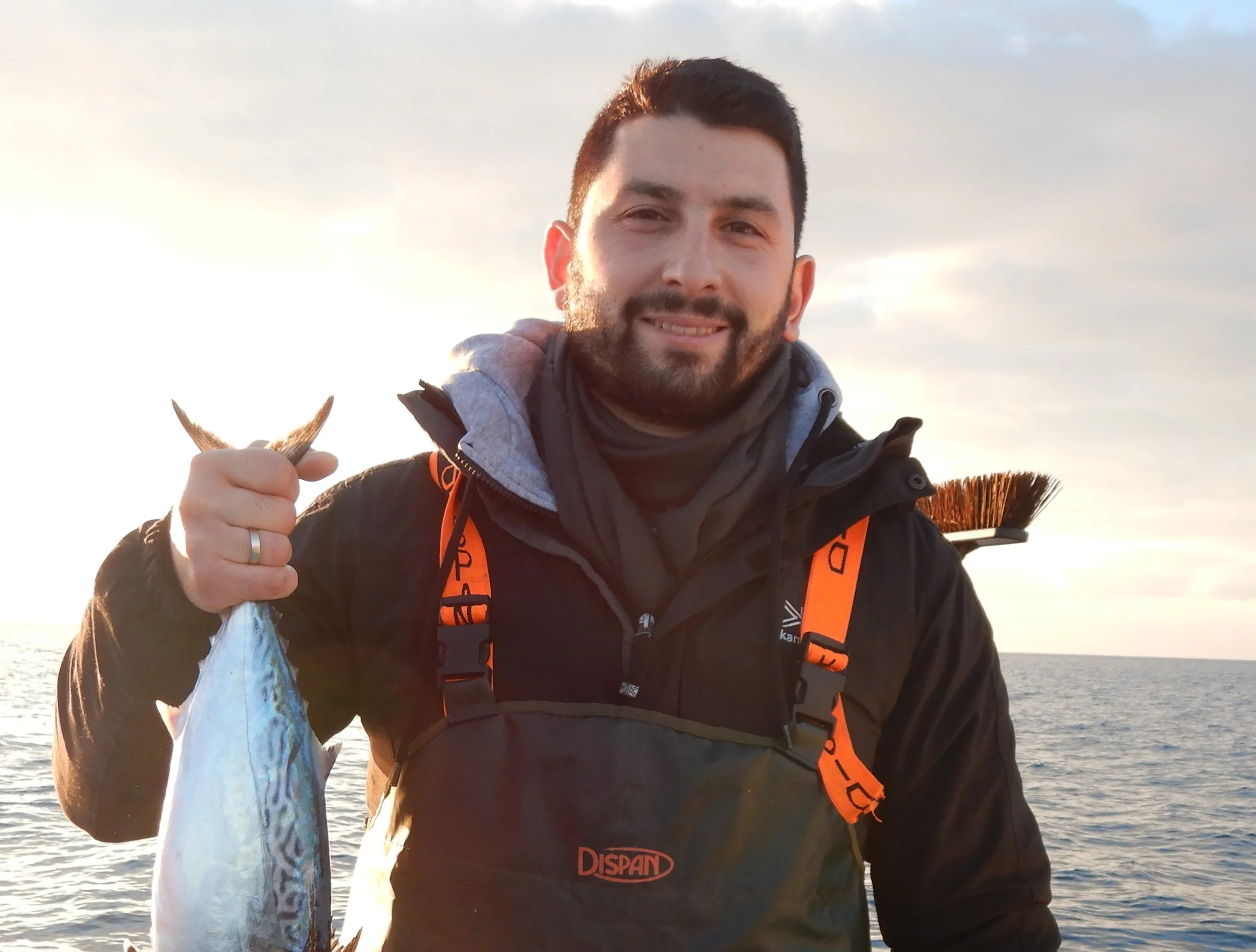
Marios Papageorgiou is Executive Director and Head of Fisheries Research at Enalia Physis Environmental Research Centre, a nonprofit organisation in Cyprus, while also completing a PhD in fisheries ecology and management. His work combines fisheries research, marine conservation, organisational leadership and close collaboration with fishers, government bodies and other partners. His career shows how scientific evidence, local knowledge, livelihoods. and management can come together in practical marine conservation work.
Profile snapshot
Role: Executive Director and Head of Fisheries Research at Enalia Physis Environmental Research Centre
Organisation type: NGO / nonprofit
Country / region: Cyprus / Europe
Role type: CEO / executive leader; Researcher
Focus areas: Fisheries and aquaculture; Conservation; Research; Stakeholder/community engagement; Policy; Social science
Jump to
Your current role
What is your current role and what kind of organisation do you work for?
I’m the Executive Director and Head of Fisheries Research at Enalia Physis Environmental Research Centre, a nonprofit organisation based in Cyprus. We work to protect the marine environment in Cyprus through research, education, awareness, policy advocacy and work with communities and decision-makers.
My role combines being a marine scientist with leading an organisation. My research focuses on fisheries, particularly how fishing affects marine wildlife and how we can reduce those impacts while supporting the people whose livelihoods depend on the sea. I also support our team, develop projects, build partnerships and help decide where the organisation should put its time and resources. Alongside that, I’m completing a PhD at the University of Patras.
What does a typical week look like?
I sometimes find it difficult to explain what I do because I wear so many different hats. One day I might be analysing fishing data or writing a scientific paper, and the next I might be discussing a project budget, preparing a funding proposal, meeting fishers and government representatives or giving a presentation at a school. There is also time with the team to discuss progress, solve problems and plan what comes next.
During fieldwork periods, the balance changes. I spend time on fishing boats recording catches, including animals caught unintentionally, or talking with fishers about their experiences and the changes they have observed over the years. At other times, most of my week is at a desk. A lot of the job is connecting those different worlds: what happens at sea, what the evidence tells us and what can realistically change in practice.
What skills do you use most often in your role, including any technical, practical, or soft skills?
Listening is one of the skills I use most. When you work with fishers, researchers, funders and public authorities, each person brings different knowledge, concerns and expectations. You need to understand those before you can work towards something together. Explaining research in language that makes sense outside a scientific audience is just as important.
Working in conservation also requires a good understanding of social-ecological systems: how people and nature are connected and influence one another. In fisheries, that means understanding how the marine environment shapes people’s livelihoods, and how their choices, local traditions, markets and management rules affect the sea. Working with fishers has helped me see these connections more clearly. If we want conservation measures to work over time, we need to understand both the ecological problem and the social conditions that shape what people can realistically do.
On the technical side, I use research design, species identification, field sampling, interviews, data analysis and scientific writing. On the management side, I use project planning, budgeting, fundraising and team coordination. Adaptability matters across all of them. A fieldwork plan can change with the weather, and an organisational priority can change with a funding decision. You need to adjust without losing sight of what you are trying to achieve.
Every job has a best part and a worst part. What are they for you?
The best part is working close to the sea and to the people who depend on it. I enjoy fieldwork, but I also find it rewarding when research becomes useful to someone: when a fisher contributes knowledge that changes our understanding of a problem, or when evidence helps shape a practical conservation proposal. Helping fishers bring their experience into discussions about the future of their sector is a part of the work I care deeply about.
The hardest part is balancing everything that makes that work possible. Running a small nonprofit means dealing with funding applications, administration, staffing and deadlines alongside the science. There are many worthwhile things we could do, and limited time and resources. It can be frustrating when the work needed to sustain the organisation leaves less time for the research and fieldwork that brought me into this career.
What is one task you do all the time that never appears in job descriptions for these types of roles?
A lot of my time goes into helping people understand one another. A fisher might describe a problem through years of experience at sea, a researcher through data, a decision-maker through policy and government agendas, and a funder through project objectives. I often have to connect those perspectives and work out what they mean for the same project or conservation goal. It can look like an informal conversation or a quick phone call, but it is an important part of getting anything done.
What does this job demand of your schedule or lifestyle?
Fieldwork can mean early starts, long days at sea and plans that depend on weather and fishing activity. Summer can be particularly demanding because of intense fieldwork requirements. Meetings, workshops and collaborations also involve travel.
Alongside that, there are proposal deadlines, responsibilities to the team and my PhD work. It takes deliberate effort to protect time for focused research and longer-term thinking. Learning to delegate and building a team with complementary skills are important parts of making that balance more manageable.
Who else do you work with or depend on to get your job done?
I depend on my team at Enalia Physis, including colleagues working in research, education, communications, operations and finance. Their work makes it possible for a project to move from an idea to something we can deliver.
Fishers and their associations are central collaborators. They make onboard research possible and contribute knowledge that we could never collect through occasional surveys alone. I also work with university researchers, government departments, other conservation organisations and funders. Depending on the project, we may need expertise in economics, policy, technology or community engagement. Marine conservation brings together far more disciplines than people might expect.
Your route into this work
How did you get into this work, and were there any key opportunities, decisions, or turning points along the way?
My interest in marine biology, together with a desire to do something useful for people who depend on the sea, has shaped my direction. While studying, I gained practical experience through Erasmus+ traineeship placements.
In 2018, I moved into a role combining project management and fisheries research. I became Vice Director of Enalia Physis in 2020 and Executive Director in September 2021. That progression gradually expanded my work from carrying out research to helping create the conditions for a whole team to do it.
Working directly with fishers has been especially important in shaping the kind of scientist I want to be. My research now brings together observations at sea, interviews and fishers’ knowledge to understand both marine wildlife and the human side of fishing.
What education, training, or experience helped you get into this role?
I studied Marine Biology and Oceanography at the University of Plymouth, followed by an MBA at the University of Central Lancashire and a research master’s (MRes) in Marine Biology at the University of Plymouth. I’m now completing a PhD in Fisheries Ecology and Management at the University of Patras, focusing on the Cypriot pelagic longline fishery, which uses baited hooks on long lines to target species such as swordfish and albacore tuna.
That combination reflects the two sides of my work. My scientific training helps me ask questions, collect reliable evidence and analyse it. The business training is relevant to managing projects and leading an organisation. More recently, I completed Oxford’s Strategic Management Executive Programme.
Practical experience has been just as important: placements, working aboard fishing vessels, interviewing fishers, coordinating projects and collaborating with people from different backgrounds. Those experiences help you understand what a research plan actually requires when you take it into the field.
Is there any education, training, or experience you wish you had done/gotten?
I would have welcomed more practical preparation for managing people and leading an organisation earlier in my career. Scientific training prepares you to investigate a question, but it does not necessarily prepare you to recruit a team, delegate responsibilities, manage competing priorities or plan for an organisation’s future.
Those are areas I continue to develop through management training and coaching. I also think facilitation and negotiation are valuable skills for anyone working where conservation, livelihoods and public policy meet.
Is there anything people think they need for this career that may not actually be essential?
People may assume that everyone in marine conservation needs a PhD, or that every role involves diving and identifying species. The requirements depend on the job. Advanced research training matters for some scientific careers, but organisations also need people who can manage projects and finances, communicate clearly, work with communities or understand policy.
Even within research, you do not have to arrive knowing everything. A solid foundation, reliability, curiosity and a willingness to learn are valuable. Being comfortable asking questions and listening to people with different expertise will take you a long way.
Reflections and advice
What advice would you give someone interested in this kind of work, and where should they look for their first step?
Try to get close to the actual work early. Contact a marine research group, conservation organisation or relevant public agency and ask about student projects, placements, seasonal roles or paid entry-level opportunities. Do this during your university years, between summer breaks. A useful first experience is one where you can contribute to a defined task and receive guidance. If you consider volunteering, be realistic about what you can afford and look for a clear learning benefit.
Build a skill you can contribute, whether that is data analysis, field sampling, writing, mapping or communication. You do not need to be good at everything immediately. Be dependable, take care with the less exciting tasks and ask why the work is being done.
If you are interested in fisheries, spend time listening to fishers. Understanding their working lives will help you ask better research questions and develop ideas that have a chance of working in practice.
What is one mistake, challenge, or lesson from early in your career that taught you something useful?
One challenge has been learning how to balance being a researcher with being responsible for an organisation. There is always another proposal, another decision or another problem that needs attention, and it is easy for focused research and strategic thinking to keep getting pushed back.
A lesson I am still putting into practice is that delegation needs time and attention. Recruiting people with complementary skills, giving them clear responsibilities and making space to support them are part of the work of leading. I have been working on this by strengthening the organisation’s operations capacity.
If you could go back in time, would you do anything differently? If so, what would that be?
I would make more deliberate space for leadership development and longer-term thinking earlier on. When you care about the work, it is easy to fill every available hour with the next immediate task. I would try to build clearer responsibilities and support systems sooner, so that the organisation’s needs and my own research could both receive sustained attention. You don’t have to be in a managerial position to be a leader.
I would still want the practical experience of working closely with fishers and spending time at sea. That continues to shape the questions I ask and the way I approach conservation.
Where do you see this field heading, and what opportunities does that create for newcomers?
From the work I am involved in, I see a growing need to connect marine science and research with livelihoods and decision-making. Questions about wildlife, fishing, climate and the use of marine space overlap. We need people who can investigate those connections and help communities and institutions use the findings.
I am particularly interested in combining scientific findings with the knowledge of people who spend their lives at sea. In my own research, fishers’ accounts help us explore historical changes that are difficult to understand from monitoring records alone.
For newcomers, I see opportunities in analysing data, developing practical ways to reduce human-wildlife interactions, supporting community participation and communicating evidence. Technology will provide useful tools, but building trust and understanding local conditions will remain an essential part of the work.
Is there anything else you’d like to say?
When people ask what I do, I sometimes struggle to give a short answer. Marine biologist is the description I feel most connected to, but the work also asks me to be a manager, a fundraiser and someone who brings people together.
What connects those roles is my interest in the sea and my wish to contribute to the lives of people who depend on it. I want our research to be useful to them as well as to the wider scientific community. That is a big part of what keeps me committed to this work.