Este perfil fue respondido originalmente en español. Publicamos las respuestas de Enrique en su idioma original, acompañadas de una traducción al inglés.
Enrique completed this profile in Spanish. Their original Spanish responses are published alongside an English translation.
Español
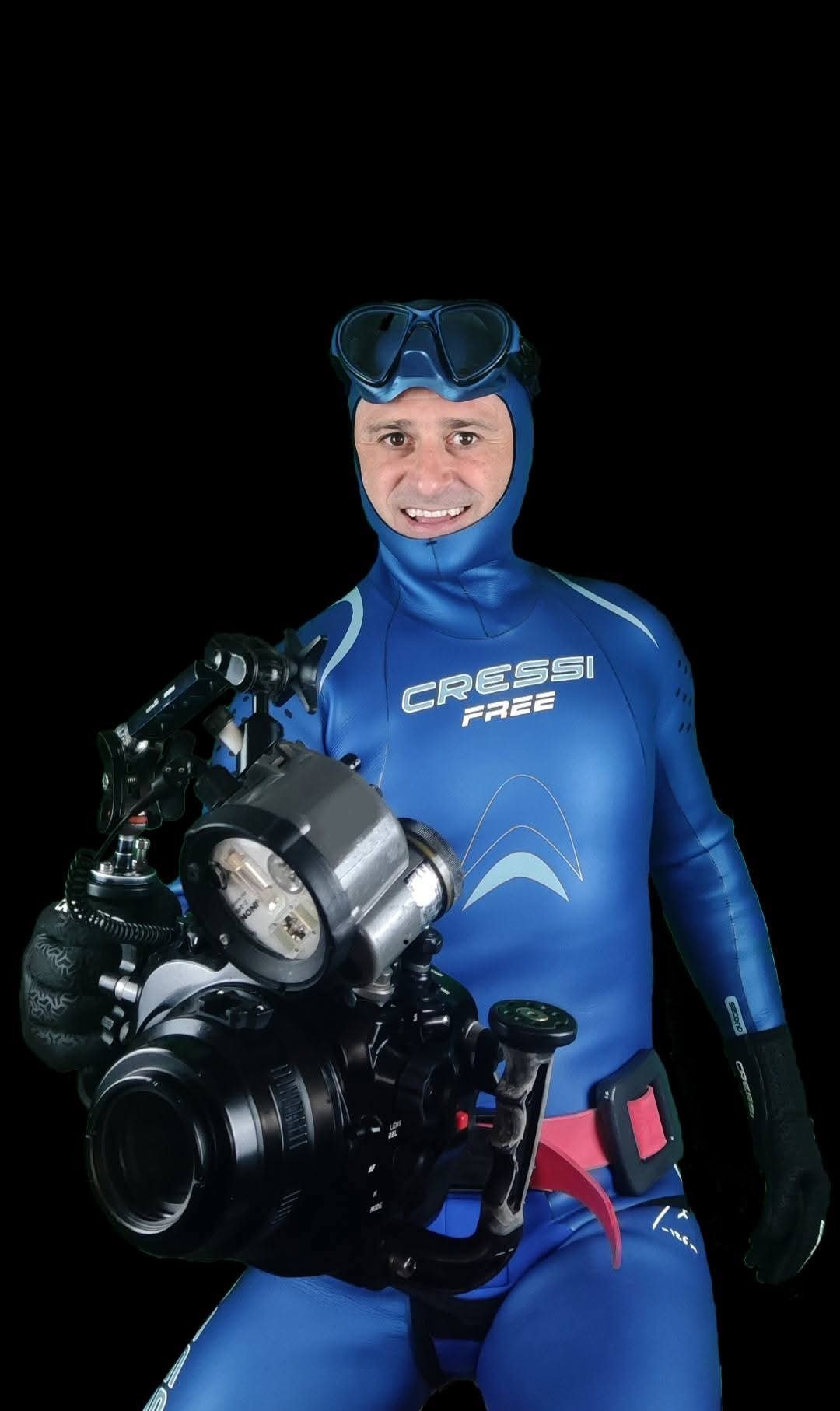
Enrique Talledo es documentalista, cámara y fotógrafo submarino freelance, y lleva unos 20 años documentando la vida marina. Su trabajo combina fotografía y filmación submarina, divulgación ambiental y colaboración con científicos, organizaciones de conservación y productoras audiovisuales. Su trayectoria muestra cómo la experiencia práctica, la observación y un profundo conocimiento del medio marino pueden convertirse en una carrera dedicada a contar historias sobre el océano.
English
Enrique Talledo is a freelance underwater documentary filmmaker, camera operator and photographer who has spent around 20 years documenting marine life. His work combines underwater photography and filming, environmental communication and collaboration with scientists, conservation organisations and audiovisual producers. His career shows how practical experience, observation and deep knowledge of the marine environment can develop into a career telling stories about the ocean.
Profile snapshot
Role: Freelance underwater documentary filmmaker, camera operator and photographer
Organisation type: Independent / freelance
Country / region: Spain / Europe
Role type: Creative / media professional
Topics: Science communication, Education and outreach, Photography, Videography
Jump to
- Tu puesto actual / Your current role
- Tu trayectoria hasta llegar a este trabajo / Your route into this work
- Reflexiones y consejos / Reflections and advice
- Conecta y descubre más / Connect and learn more
Tu puesto actual / Your current role
¿Cuál es tu puesto actual y en qué tipo de organización trabajas? / What is your current role and what kind of organisation do you work for?
Español
Documentalista, cámara y fotógrafo submarino. Trabajo de modo freelance con múltiples organizaciones como el Instituto Español de Oceanografía, la Fundación Oceana, empresas como la Productora Avis Producciones, Crusoe Treasure, ayuntamientos, tratando de apoyar a aquellos proyectos que se dedican a divulgar y proteger los océanos.
English
Documentary filmmaker, camera operator and underwater photographer. I work freelance with multiple organisations such as the Spanish Institute of Oceanography, the Oceana Foundation, companies such as the production company Avis Producciones, Crusoe Treasure, and local councils, trying to support those projects dedicated to raising awareness of and protecting the oceans.
¿Cómo es una semana típica para ti? / What does a typical week look like?
Español
Documentando la vida marina, editando imágenes, trabajando en un nuevo libro (Cantábrico salvaje) y en ocasiones también dando charlas-proyección de divulgación ambiental de los océanos, exposiciones...
English
Documenting marine life, editing images, working on a new book (Cantábrico salvaje) and, on occasion, also giving talks and screenings on ocean environmental awareness, exhibitions...
¿Qué habilidades utilizas con más frecuencia en tu puesto, incluidas las técnicas, las prácticas o las interpersonales? / What skills do you use most often in your role, including any technical, practical, or soft skills?
Español
Fotografía y filmación submarina, manejo de cámaras y equipos audiovisuales, buceo y apnea, observación e identificación de vida marina y documentación de ecosistemas. Edición de fotografía y vídeo y creación de contenidos audiovisuales. También utilizo habitualmente habilidades de comunicación y divulgación ambiental, tanto en charlas y proyecciones como en exposiciones y otros proyectos educativos. Mi trabajo requiere además capacidad de adaptación, planificación, trabajo en equipo y resolución de problemas, especialmente durante el trabajo de campo y las expediciones.
English
Underwater photography and filming, handling cameras and audiovisual equipment, scuba diving and freediving, observation and identification of marine life, and documentation of ecosystems. Editing photography and video and creating audiovisual content. I also regularly use communication and environmental outreach skills, both in talks and screenings and in exhibitions and other educational projects. My work also requires adaptability, planning, teamwork and problem-solving, especially during fieldwork and expeditions.
Todo trabajo tiene una parte buena y una parte mala. ¿Cuáles son para ti? / Every job has a best part and a worst part. What are they for you?
Español
La mejor parte de mi trabajo es poder estar en contacto con el mar y la naturaleza, descubrir y documentar comportamientos y especies y, sobre todo, tener la oportunidad de compartirlos con otras personas y contribuir a que conozcan y valoren más nuestros océanos. También disfruto mucho de la parte creativa: conseguir una imagen o una secuencia que llevaba tiempo buscando es muy gratificante.
La parte menos buena es que detrás de esas imágenes hay muchas horas de trabajo que no se ven: planificación, desplazamientos, edición, condiciones difíciles en el mar y, en ocasiones, bastante incertidumbre, porque la naturaleza no siempre te ofrece lo que buscas. Aun así, es precisamente esa imprevisibilidad la que también hace que mi trabajo sea especial.
English
The best part of my work is being able to be in contact with the sea and nature, discovering and documenting behaviours and species and, above all, having the opportunity to share them with other people and help them know and value our oceans more. I also really enjoy the creative side: getting an image or a sequence that I had been looking for for some time is very rewarding.
The less good part is that behind those images there are many hours of work that are not seen: planning, travel, editing, difficult conditions at sea and, on occasions, quite a lot of uncertainty, because nature does not always give you what you are looking for. Even so, it is precisely that unpredictability that also makes my work special.
¿Cuál es una tarea que realizas constantemente y que nunca aparece en las descripciones de estos tipos de puestos? / What is one task you do all the time that never appears in job descriptions for these types of roles?
Español
Esperar y observar. Una parte enorme de mi trabajo consiste en tener paciencia: pasar horas buscando una especie, estudiando su comportamiento o esperando que ocurra el momento adecuado. Muchas veces vuelves sin la imagen que buscabas y tienes que intentarlo de nuevo. En fotografía y filmación de los océanos, saber esperar y aprender a interpretar lo que está ocurriendo a tu alrededor es casi tan importante como saber manejar una cámara. También, al estar de autónomo las tareas relacionadas con las gestiones administrativas
English
Waiting and observing. A huge part of my work consists of being patient: spending hours looking for a species, studying its behaviour or waiting for the right moment to happen. Many times you come back without the image you were looking for and you have to try again.
In ocean photography and filming, knowing how to wait and learning to interpret what is happening around you is almost as important as knowing how to use a camera. Also, being self-employed means dealing with the administrative tasks that come with it.
¿Qué exigencias tiene este trabajo en cuanto a tu horario o estilo de vida (viajes, temporadas de campo, trabajo de guardia, etc.)? / What does this job demand of your schedule or lifestyle (travel, field seasons, on-call work, etc.)?
Español
Es un trabajo que exige mucha flexibilidad. Los horarios dependen a menudo del estado del mar, la meteorología, las mareas, la época del año y la presencia de determinadas especies. Esto puede implicar madrugar, trabajar de noche, fines de semana o cambiar los planes con muy poca antelación. También requiere viajar y pasar temporadas fuera de casa durante rodajes, expediciones o trabajos de campo. En muchas ocasiones hay que aprovechar una oportunidad cuando aparece, porque en la naturaleza difícilmente puedes repetir una situación. A cambio, es un estilo de vida que me permite vivir experiencias extraordinarias y estar en contacto permanente con el medio natural.
English
It is a job that requires a lot of flexibility. Schedules often depend on the state of the sea, the weather, the tides, the time of year and the presence of certain species. This can mean getting up early, working at night, at weekends, or changing plans at very short notice.
It also requires travelling and spending periods away from home during filming, expeditions or fieldwork. On many occasions you have to take advantage of an opportunity when it appears, because in nature you can hardly repeat a situation. In return, it is a lifestyle that allows me to experience extraordinary things and be in permanent contact with the natural environment.
¿Con quién más trabajas o de quién dependes para realizar tu trabajo (otros puestos, disciplinas, organismos)? / Who else do you work with or depend on to get your job done (other roles, disciplines, agencies)?
Español
Aunque gran parte de mi trabajo lo realizo de manera autónoma, colaboro habitualmente con biólogos marinos, investigadores y otros especialistas, especialmente cuando se trata de documentar especies, comportamientos o proyectos científicos. También trabajo con equipos audiovisuales, productores, realizadores, buceadores, patrones de embarcación y personal técnico. Dependiendo del proyecto, colaboro con universidades, centros de investigación, administraciones públicas, ONG y organizaciones dedicadas a la conservación marina. El intercambio de conocimientos entre la parte científica y la audiovisual es fundamental para que el resultado sea riguroso y, al mismo tiempo, llegue al público.
English
Although I carry out a large part of my work independently, I regularly collaborate with marine biologists, researchers and other specialists, especially when it comes to documenting species, behaviours or scientific projects. I also work with audiovisual teams, producers, directors, divers, boat skippers and technical staff. Depending on the project, I collaborate with universities, research centres, public administrations, NGOs and organisations dedicated to marine conservation. The exchange of knowledge between the scientific and audiovisual sides is fundamental so that the result is rigorous and, at the same time, reaches the public.
Tu trayectoria hasta llegar a este trabajo / Your route into this work
¿Cómo llegaste a dedicarte a esto? ¿Hubo alguna oportunidad, decisión o punto de inflexión clave a lo largo del camino? / How did you get into this work, and were there any key opportunities, decisions, or turning points along the way?
Español
Tuve claro cuando di el paso, no empezaba de cero, sabía como iba el sector y tenía muchos contactos. Durante muchos años era mi hobby, viajé mucho y participé en numerosos campeonatos de fotografia a pulmón y con botella, lo que me permitió conocer muchos fondos marinos y las especies, a la vez que me ayudo a tener más soltura con los equipos y con el buceo en si. De esta manera en la actualidad, desde hace 20 años combino a nivel profesional el video y la fotografía submarina.
English
I was clear about it when I took the step; I wasn't starting from zero, I knew how the sector worked and I had many contacts. For many years it was my hobby, I travelled a lot and participated in numerous breath-hold and scuba photography competitions, which allowed me to get to know many seabeds and species, while at the same time helping me to become more comfortable with the equipment and with diving itself. In this way, at present, for the last 20 years I have combined underwater video and photography professionally.
¿Qué formación académica, formación profesional o experiencia te ayudó a acceder a este puesto? / What education, training, or experience helped you get into this role?
Español
Pues realmente ha sido una trayectoria más autodidacta que académica. Lo que he conseguido se lo debo a las ingentes horas pasadas en el medio marino en aguas de los cinco continentes, algunos cursos de imagen submarina, biología marina, buceo y la información de más de 200 libros que he ido adquiriendo de la vida marina a lo largo del planeta. Me baso en cuatro pilares, el esfuerzo, la pasión, dedicación y compromiso.
English
Well, really it has been a more self-taught than academic path. What I have achieved I owe to the enormous number of hours spent in the marine environment in waters across the five continents, some courses in underwater imaging, marine biology and diving, and the information from more than 200 books about marine life around the planet that I have acquired over the years. My approach is based on four pillars: effort, passion, dedication and commitment.
¿Cuál es una oportunidad a la que casi no te presentaste, pero te alegras de haberlo hecho, y por qué? / What is one opportunity you almost didn’t apply for, but are glad you did, and why?
Español
Si, a un proyecto al que dediqué dos años de mi vida, una gran enciclopedia marina, un trabajo que aunque no vió la luz finalmente por la crisis del 2008, me aportó muchísimos conocimientos, contactos y experiencia audiovisual.
English
Yes, a project to which I devoted two years of my life – a major marine encyclopaedia – a project which, although it ultimately never saw the light of day because of the 2008 financial crisis, gave me a great deal of knowledge, contacts and audiovisual experience.
¿Hay alguna formación académica, formación profesional o experiencia que te hubiera gustado tener? / Is there any education, training, or experience you wish you had done/gotten?
Español
Realmente no, estoy muy satisfecho del recorrido que he realizado y como lo he llevado a cabo. Vale, confieso que si me hubiera gustado más experiencias con algunas criaturas que no he documentado aún.
English
Not really, I am very satisfied with the path I have taken and how I have carried it out. Okay, I confess that I would have liked to have had more experiences with some creatures that I have not yet documented.
¿Hay algo que la gente crea que necesita para esta carrera profesional y que, en realidad, quizá no sea esencial? / Is there anything people think they need for this career that may not actually be essential?
Español
Si, estar a la última en cuanto al material se refiere. Opino que es más importante, el conocimiento del medio, donde localizar especies, sus comportamientos, etc. No sirve de mucho tener el mejor equipo de imagen submarina si después vas al agua en contadas ocasiones.
English
Yes, being completely up to date when it comes to equipment. I think knowledge of the environment – where to find species, their behaviours, etc. – is more important. There is not much point in having the best underwater imaging equipment if afterwards you only go into the water on a few occasions.
Reflexiones y consejos / Reflections and advice
¿Qué consejo le darías a alguien interesado en este tipo de trabajo y dónde debería empezar? / What advice would you give someone interested in this kind of work, and where should they look for their first step?
Español
Le aconsejaría que, antes que nada, sintiera verdadera curiosidad y respeto por el mar y la naturaleza. La técnica fotográfica se puede aprender, pero para documentar vida salvaje es fundamental conocer aquello que quieres contar: observar, aprender sobre las especies y entender su comportamiento. También le diría que tenga paciencia y constancia, porque muchas veces una buena imagen es el resultado de muchos intentos y muchas horas sin conseguir nada. Para empezar, no hace falta disponer del mejor equipo ni viajar a lugares remotos; se puede comenzar explorando y documentando la naturaleza más cercana. Y, sobre todo, que intente desarrollar una mirada propia y tenga algo que contar con sus imágenes.
English
I would advise them, first of all, to feel genuine curiosity and respect for the sea and nature. Photographic technique can be learned, but to document wildlife it is fundamental to know what you want to tell: to observe, learn about the species and understand their behaviour. I would also tell them to have patience and perseverance, because many times a good image is the result of many attempts and many hours without achieving anything. To begin with, it is not necessary to have the best equipment or travel to remote places; you can start by exploring and documenting the nature closest to you. And, above all, try to develop your own way of seeing and have something to tell with your images.
¿Cuál es un error, un reto o una lección de los inicios de tu carrera que te haya enseñado algo útil? / What is one mistake, challenge, or lesson from early in your career that taught you something useful?
Español
Aprendí que hay que saber aceptar que muchas veces vuelves sin conseguir lo que buscabas. La paciencia y la perseverancia forman parte del trabajo. En la naturaleza, el fracaso de un día muchas veces es el conocimiento que te permite conseguir la imagen otro día.
English
I learned that you have to know how to accept that many times you come back without getting what you were looking for. Patience and perseverance are part of the work. In nature, the failure of one day is often the knowledge that allows you to get the image another day.
Si pudieras volver atrás en el tiempo, ¿harías algo de forma diferente? En caso afirmativo, ¿qué sería? / If you could go back in time, would you do anything differently? If so, what would that be?
Español
Probablemente no cambiaría demasiado. Los aciertos, pero también los errores y las dificultades, han formado parte del aprendizaje y me han llevado hasta donde estoy.
English
I probably would not change too much. The successes, but also the mistakes and difficulties, have been part of the learning process and have brought me to where I am.
¿Hacia dónde crees que se dirige este sector y qué oportunidades ofrece eso a los recién llegados? / Where do you see this field heading, and what opportunities does that create for newcomers?
Español
Creo que el sector se dirige hacia nuevas formas de contar y acercar la naturaleza al público. Las cámaras son cada vez más pequeñas y capaces, y tecnologías como los drones, las cámaras 360º, la realidad virtual o los nuevos formatos digitales permiten mostrar el mundo natural de maneras que hace pocos años eran impensables.
Al mismo tiempo, en una época en la que cada vez es más fácil crear imágenes artificialmente, creo que tendrá todavía más valor documentar comportamientos y acontecimientos reales y contar historias auténticas. Para quienes empiezan, esto abre muchas oportunidades: no solo importa dominar una cámara, sino tener curiosidad, conocimiento del medio, creatividad y, sobre todo, algo propio que contar.
English
I think the sector is moving towards new ways of telling and bringing nature closer to the public. Cameras are becoming smaller and more capable, and technologies such as drones, 360º cameras, virtual reality or new digital formats allow the natural world to be shown in ways that were unthinkable only a few years ago.
At the same time, in an era in which it is increasingly easy to create images artificially, I think documenting real behaviours and events and telling authentic stories will have even more value. For those starting out, this opens many opportunities: it is not only important to master a camera, but also to have curiosity, knowledge of the environment, creativity and, above all, something of your own to tell.
¿Hay algo más que te gustaría añadir? / Is there anything else you’d like to say?
Español
Después de muchos años trabajando en el mar, sigo sintiendo la misma curiosidad cada vez que entro en el agua. Creo que esa capacidad de sorprenderse es fundamental en este oficio. Para mí, una imagen no debería servir únicamente para mostrar algo bello, sino también para despertar curiosidad, transmitir conocimiento y ayudar a valorar aquello que estamos mostrando. Si con mi trabajo consigo que alguien conozca un poco mejor el océano y sienta que merece la pena protegerlo, entonces creo que ha cumplido su propósito.
English
After many years working at sea, I still feel the same curiosity every time I enter the water. I think that ability to be amazed is fundamental in this profession. For me, an image should not serve only to show something beautiful, but also to awaken curiosity, transmit knowledge and help people value what we are showing. If through my work I manage to help someone know the ocean a little better and feel that it is worth protecting, then I think it has fulfilled its purpose.