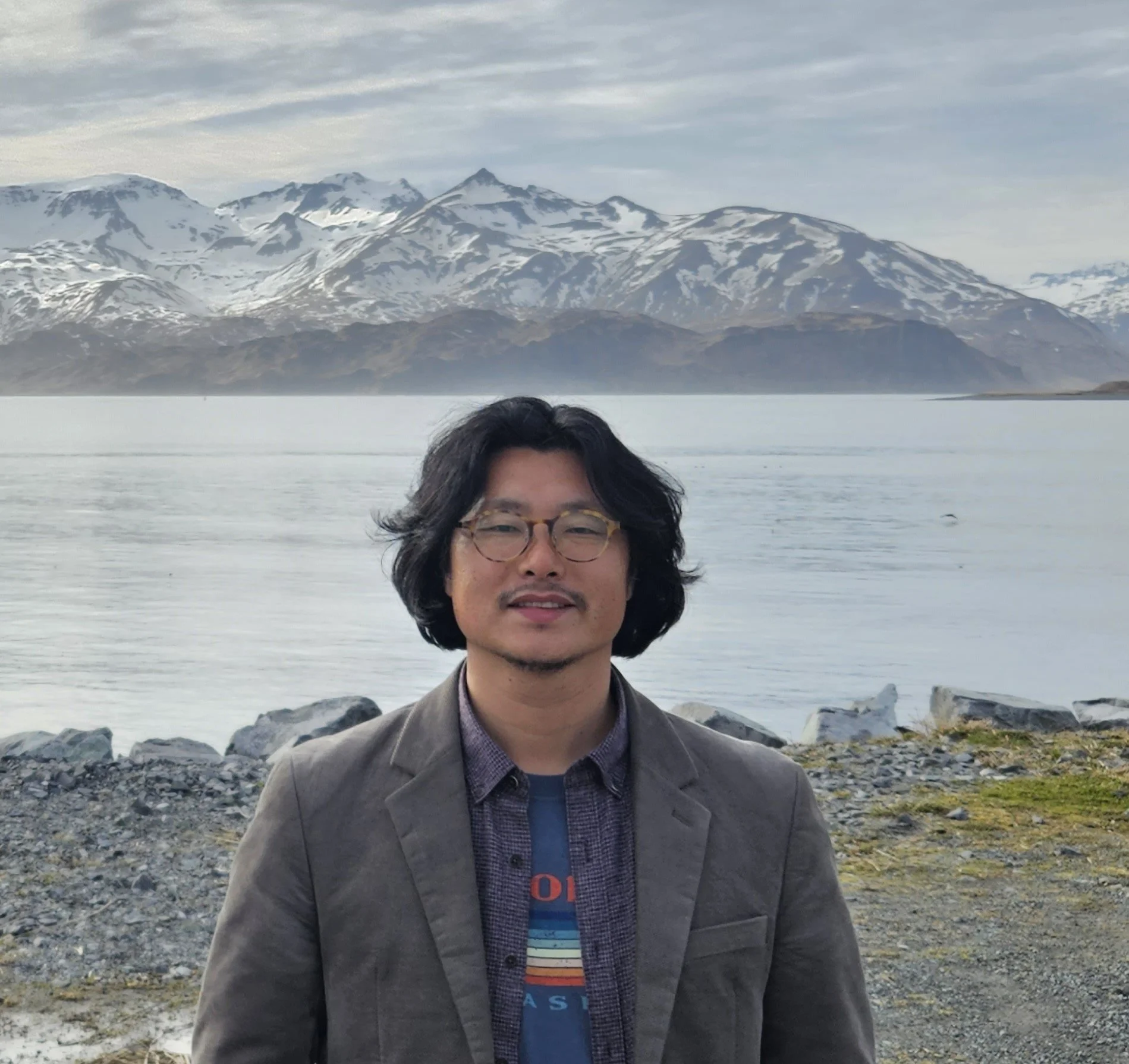
Mark Seo is the MSC Program Director for Korea, leading the Marine Stewardship Council’s work with fisheries, seafood businesses, government, researchers and other stakeholders, alongside working as an Adjunct Professor at Pukyong National University. Their career moved from consulting, international standards and business into fisheries and seafood sustainability, and now also includes teaching, writing and documentary work.
Profile snapshot
Role: MSC Program Director for Korea / Adjunct Professor
Organisation type: NGO / nonprofit; University / academia
Country / region: Korea / Asia
Role type: Director / senior leader; Educator
Focus areas: Fisheries and Aquaculture; Sustainable seafood; Policy and governance; Education; Stakeholder/community engagement; Economics; Science communication
Jump to
Your current role
What is your current role and what kind of organization do you work for?
I currently work as the MSC Program Director for Korea, leading the Marine Stewardship Council's work in Korea. MSC is an international non-profit organisation working with fisheries, seafood businesses, governments, scientists and other stakeholders to promote sustainable fishing and responsible seafood.
I established the MSC Korea office in 2018, and since then I have been working closely with Korean fisheries, fishing cooperatives, seafood companies, retailers, government agencies, universities and researchers.
Alongside my work with MSC, I am an Adjunct Professor in the Department of Marine & Fisheries Business and Economics at Pukyong National University in Busan, Korea, where I teach and work with graduate students.
My work today sits at the intersection of sustainable fisheries, seafood business, international standards, certification, education and communication.
What I find particularly interesting is that these areas are increasingly connected. Sustainable fisheries are not only about fish stocks. They are also about markets, technology, supply chains, communities, finance, policy and ultimately the choices people make about seafood.
What does a typical week look like?
There isn't really a typical week.
One day I may be discussing the sustainability of a fishery with fishermen and a fishing cooperative. The next day I may be meeting a seafood company or retailer about responsible sourcing and certification.
I also teach graduate students, prepare lectures, write reports and articles, participate in international meetings and work with colleagues across the Asia-Pacific region.
Sometimes I am involved in a government or international cooperation project. At other times I may be working on a documentary or writing about sustainable fisheries.
I travel around Korea to meet people in fisheries and seafood businesses, and occasionally travel internationally for conferences, projects and field work.
A significant part of my job is also simply reading and learning. Fisheries are constantly changing, so I need to keep up with science, policy, markets, technology and international developments.
I suppose the common thread through all of this is trying to connect knowledge with practice.
What skills do you use most often in your role, including any technical, practical, or soft skills?
Communication is probably the skill I use most.
But communication in this field isn't just about speaking or presenting. It is about being able to understand people who have very different perspectives.
A scientist, a fisherman, a government official, a seafood company and an environmental organisation can all use the word "sustainability", but they may understand it quite differently.
I often find myself translating between these different perspectives.
I also use research and analytical skills, project management, negotiation, writing, teaching and public speaking.
My earlier experience in international standards, consulting and certification has been particularly useful. I worked as a consultant and later as an auditor and sales manager with SGS, where I gained experience with international management standards such as ISO 9001 and ISO 14001.
That background taught me to look at organisations as systems: how policies, people, processes, evidence and decision-making fit together.
Over time, I applied that way of thinking specifically to fisheries and seafood.
Every job has a best part and a worst part. What are they for you?
The best part is meeting people who are trying to make the seafood sector better.
I have met fishermen who have spent their entire lives at sea, scientists who have devoted decades to particular species, seafood companies trying to improve their supply chains, young people who want to work in sustainability, and communities looking for new opportunities.
Those conversations constantly teach me something.
The difficult part is that change in fisheries can be slow.
There are many stakeholders, different interests and sometimes very different views about what should happen next. Even when everyone agrees that sustainability is important, agreeing on how to achieve it can be difficult.
But I have learned that this is part of the work.
Changing a fishery or a seafood supply chain is rarely a quick process. It is more like changing the direction of a large ship. You make many small adjustments before you see a significant change in direction.
What is one task you do all the time that never appears in job descriptions for these types of roles?
Connecting the dots.
I often find myself connecting people, organisations and ideas.
A conversation with a fisherman might give me an idea for a university research project. A discussion with a retailer might change the way I think about certification. Something I learn from a student might lead to a new project.
I also spend a lot of time explaining one sector to another.
That isn't usually written into a job description, but I think it is one of the most important things I do.
What does this job demand of your schedule or lifestyle?
It requires flexibility.
I work with people in different countries and time zones, so there are sometimes early-morning or evening meetings.
There is also travel within Korea and internationally.
Field visits are particularly important to me because fisheries cannot really be understood from a conference room.
You need to see the fishing ports, meet the fishermen, visit the processing facilities and talk to people who actually work in the supply chain.
I also teach, write and occasionally work on documentary and media projects, so my schedule can be quite varied.
Who else do you work with or depend on to get your job done?
Almost every part of the ocean sector!
I work with fishermen and fishing cooperatives, seafood processors, traders, retailers, restaurants, government agencies, universities, researchers, NGOs and international organisations.
I also work with colleagues across MSC's Asia-Pacific and global teams.
My university work brings me into contact with professors, researchers and students from Korea and other countries.
One of the things I like about ocean work is that it is inherently interdisciplinary. You can't solve a fisheries problem with fisheries knowledge alone.
Your route into this work
How did you get into this work, and were there any key opportunities, decisions, or turning points along the way?
My career has been a process of gradually narrowing my professional focus.
I started my professional career in consulting and international standards, working with organisations on management systems and business issues. I later worked with SGS as an auditor and sales manager.
That experience gave me a strong foundation in international standards, certification, auditing and business.
At the same time, I became increasingly interested in technology, business and policy.
I completed a master's degree in Technology Business Policy at Pusan National University, followed by a PhD in Technology Management at Pukyong National University. I also completed a Global MBA at the University of Aberdeen.
These studies helped me understand how technology, business, organisations and policy interact.
Then I began to focus more specifically on the fisheries and seafood sector.
The more I studied fisheries, the more I realised how complex the sector was. Fisheries involve science, economics, communities, markets, government policy, international trade and environmental issues all at the same time.
So rather than simply moving into the marine sector, I gradually specialised in fisheries and seafood sustainability.
My work with MSC became a major part of that journey. In 2018, I established the MSC Korea office.
Since then, I have had the opportunity to work directly with Korean fisheries and seafood businesses and to connect the Korean sector with international discussions about sustainable fishing.
My work has also taken me beyond Korea.
For example, I participated in a KOICA [Korea International Cooperation Agency] project in Tanzania, including work in Zanzibar where I provided capacity-building training for women seaweed producers.
That experience was particularly memorable because it showed me that sustainability is not only about environmental management. For coastal communities, it can also be about livelihoods, women's economic opportunities, local organisations and access to markets.
I have also been involved in international cooperation and education projects, including work related to sustainable fisheries in countries such as Senegal.
Over time, I have also started to communicate these experiences through writing and film. I have published books about sustainable fisheries and the seafood sector, and I have produced and directed documentaries dealing with marine and fisheries issues.
So my route into this field was not one big career decision.
It was a gradual process of building knowledge, gaining practical experience and progressively narrowing my professional focus towards fisheries and ocean sustainability.
What education, training, or experience helped you get into this role?
For me, it was the combination of education and practical experience.
My early professional experience in consulting, international standards and certification gave me a strong understanding of how organisations work.
My master's degree in Technology Business Policy at Pusan National University helped me understand the relationship between technology, business and public policy.
My PhD in Technology Management at Pukyong National University gave me deeper research and analytical skills.
My Global MBA from the University of Aberdeen added an international business perspective.
Then I developed more specialised knowledge of fisheries, seafood and sustainability through research, teaching, field experience and professional work.
I also learned a great deal simply by spending time with people in the sector.
Working with fishermen, fishing cooperatives, seafood businesses, government officials and researchers taught me things that no classroom could have taught me.
My work in Zanzibar, my involvement in KOICA projects, my university teaching, my writing and my documentary work have all added different perspectives.
Looking back, I don't think there was one qualification that prepared me for my current role.
It was the combination of standards, business, technology, research, fisheries and field experience.
What is one opportunity you almost didn’t apply for, but are glad you did, and why?
The opportunity to develop the MSC presence in Korea stands out.
My previous experience wasn't the conventional background of someone entering fisheries sustainability. I had come through consulting, international standards, auditing, business and technology management.
But I decided to take the opportunity.
It allowed me to bring together many of the skills I had developed throughout my career and apply them to fisheries and ocean sustainability.
It also taught me something important: sometimes an opportunity doesn't require you to already have every skill listed in the job description.
Sometimes the value you bring comes from the combination of experiences you already have.
Is there any education, training, or experience you wish you had done/gotten?
I wish I had developed stronger data science and programming skills earlier in my career.
The ocean sector is becoming increasingly data-driven. We now have information from fishing vessels, electronic monitoring, traceability systems, satellites, markets and environmental observations.
Being able to turn that information into useful knowledge is becoming increasingly important.
I also wish I had spent more time on fishing vessels and in fishing communities earlier.
You can read hundreds of reports about fisheries, but there are things you understand differently when you are standing on a fishing boat or talking directly to the people whose livelihoods depend on the sea.
Is there anything people think they need for this career that may not actually be essential?
I don't think you necessarily need to start with a traditional marine science degree.
Of course, scientific knowledge is extremely important, but the ocean sector needs many different skills.
We need scientists, but we also need economists, lawyers, data specialists, business professionals, communicators, educators, designers, engineers, policy specialists and community organisers.
My own career is an example of that.
I entered the fisheries sustainability field after working in international standards, consulting and business.
What matters is developing expertise that can be applied to ocean problems.
And perhaps more importantly, you need to be willing to keep learning.
Reflections and advice
What advice would you give someone interested in this kind of work, and where should they look for their first step?
My first piece of advice would be: don't limit yourself to jobs that have "marine" or "ocean" in the title.
The ocean economy is much larger than that.
Look at universities, research institutes, NGOs, fishing organisations, seafood companies, retailers, government agencies, consulting firms, technology companies and international organisations.
A data scientist working on fisheries data, a sustainability manager at a seafood company, a supply-chain specialist working with seafood, a communications professional working for an ocean organisation or a policy researcher can all contribute to the ocean sector.
I would also encourage people to talk directly to people already working in the field.
Go to conferences. Join seminars. Contact researchers. Visit fishing communities. Volunteer for projects. Ask questions.
Your first step doesn't have to be your final career.
It can simply be the opportunity that helps you discover what you want to do next.
What is one mistake, challenge, or lesson from early in your career that taught you something useful?
Earlier in my career, I sometimes thought I needed to demonstrate that I knew the answer.
With experience, I realised that asking the right question is often more valuable than immediately having an answer.
In fisheries, nobody has the complete picture.
A scientist knows things a fisherman may not know. A fisherman understands the sea and the fishery in ways that a scientist may not. A businessperson understands markets. A policymaker understands the regulatory environment.
Good work happens when those different types of knowledge come together.
That has made me much more comfortable with saying, "I don't know. Let's find out."
If you could go back in time would you do anything differently? If so, what would that be?
I would probably specialise a little earlier.
I spent quite a long time building experience across consulting, standards, auditing, technology management and business.
At the time, each step seemed separate.
Today, I can see that they eventually became useful in fisheries and sustainability.
But if I could go back, I would probably start spending more time with fisheries and seafood professionals earlier and develop deeper sector-specific knowledge sooner.
At the same time, I wouldn't want to remove the diversity of my earlier experience.
The combination of international standards, business, technology and fisheries is actually what allows me to approach ocean issues from several different perspectives.
Where do you see this field heading, and what opportunities does that create for newcomers?
I think the ocean sector is moving towards a much more integrated approach.
Sustainable fisheries are increasingly connected to food security, climate change, biodiversity, technology, finance, supply chains and business strategy.
That creates opportunities for people with many different backgrounds.
Fisheries will need better data and traceability.
Seafood companies will need people who understand sustainability risks and responsible sourcing.
Governments will need people who can connect science and policy.
Technology companies will have opportunities to develop better monitoring and information systems.
Financial institutions are also becoming more interested in environmental risks and natural-resource dependence.
I also think there will be increasing demand for people who can work across disciplines.
The future ocean professional may not be simply a marine scientist or a fisheries manager.
They might be someone who understands data and fisheries, finance and biodiversity, technology and communities, or business and sustainability.
That is an exciting opportunity for people entering the field now.
Is there anything else you’d like to say?
One thing I have learned from my career is that ocean work is ultimately about people as much as it is about the ocean.
Working with fishermen in Korea, women seaweed producers in Zanzibar, students at a university, seafood businesses and international organisations has shown me that sustainability means different things to different people.
For a scientist, it might mean the health of a fish stock.
For a fisherman, it might mean having enough fish to support the next generation.
For a business, it might mean a reliable and responsible supply chain.
For a community, it might mean livelihoods and opportunities.
For a consumer, it might simply mean knowing that the seafood on their plate has been responsibly sourced.
These perspectives need to be connected.
That is what has kept me interested in this field.
My own career has gradually moved from standards and certification, to business and technology, and then towards fisheries and ocean sustainability.
Along the way, I have had the opportunity to work in classrooms, fishing communities, businesses, international projects and even behind a camera making documentaries.
I think that is one of the exciting things about working in the ocean sector.
There isn't just one way in.
You can bring your existing skills, experiences and curiosity, and find a way to apply them to the ocean.
And you can continue learning as you go.