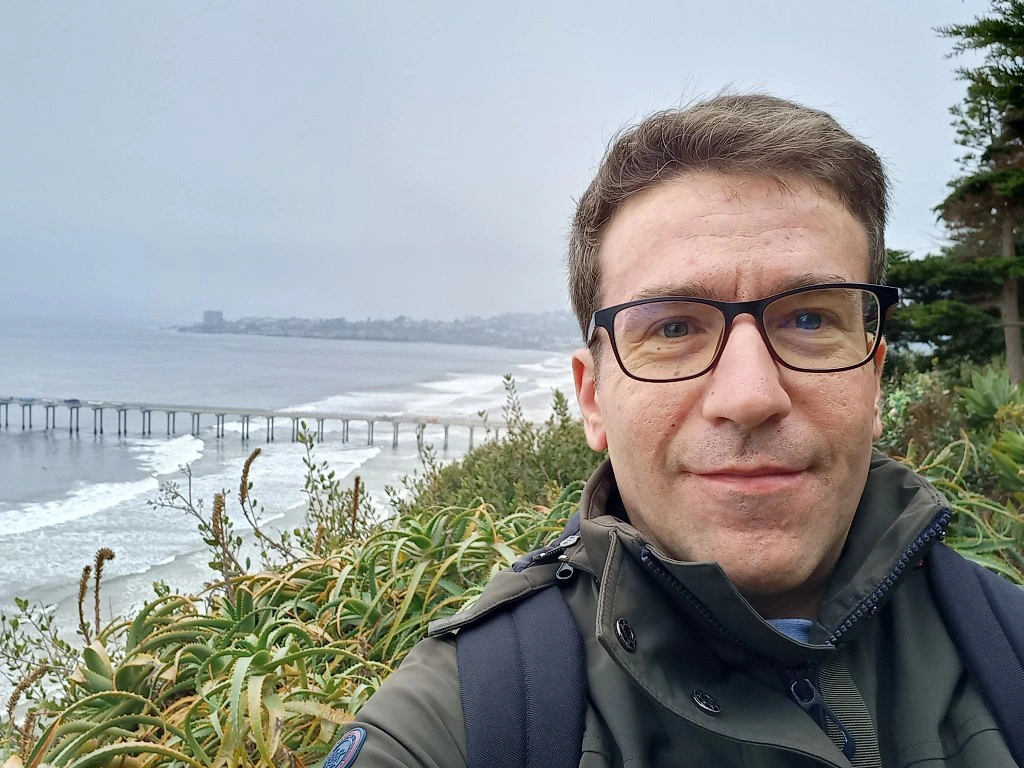
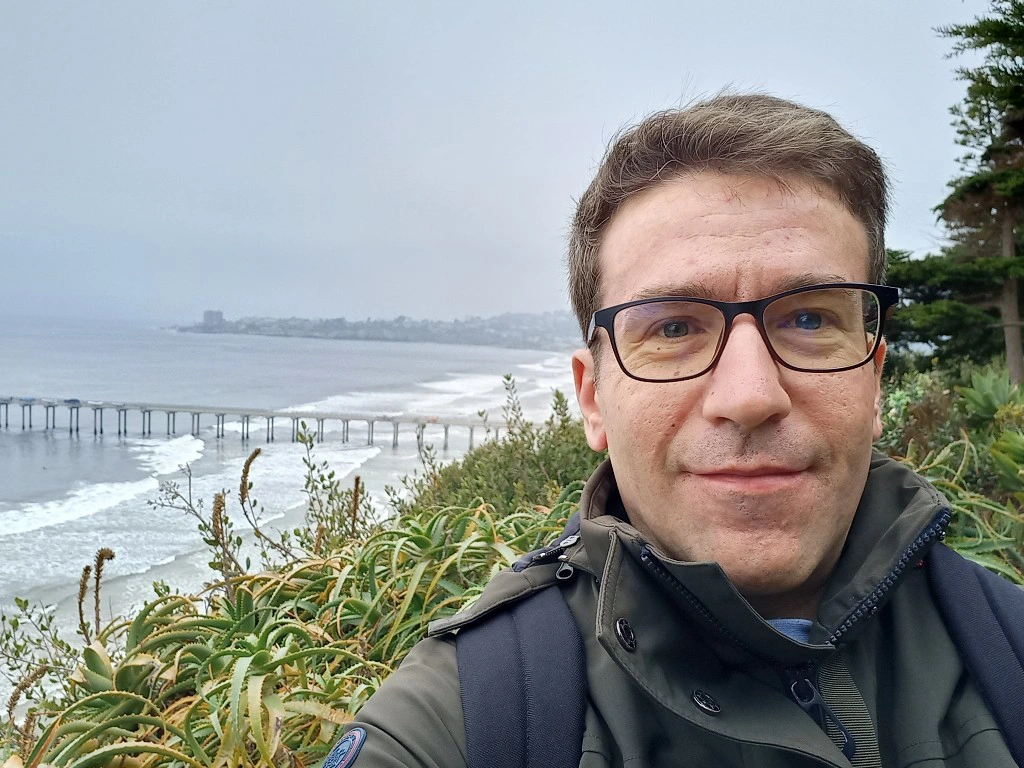
Andreas Tsakiridis is a senior economist at an international non-profit organisation working on sustainable fisheries and seafood supply chains. He leads economics research on sustainable fisheries, seafood markets and ocean conservation, combining economic and statistical analysis with work intended to support real-world sustainability decisions. His career shows how economics and quantitative research can lead to an ocean career outside the traditional academic pathway.
Profile snapshot
Role: Senior Economist at the Marine Stewardship Council (MSC)
Organisation type: NGO / nonprofit
Country / region: Netherlands / Europe
Role type: Researcher; Economist
Focus areas: Research; Fisheries and aquaculture; Blue economy; Economics; Sustainable seafood; Social science
Jump to
Your current role
What is your current role and what kind of organization do you work for?
I am a senior economist at an international non-profit organization that promotes sustainable fisheries and seafood supply chains. The organization develops standards that help ensure fish are harvested in ways that minimize environmental impacts on marine ecosystems, while also providing assurance to businesses and consumers that seafood comes from responsible and sustainable sources.
My role spans a variety of activities, but at its core I am responsible for developing and leading the organization’s economics research workstream. This involves designing and conducting research that helps us better understand the economic dimensions of sustainable fisheries, seafood markets, and ocean conservation, and translating that evidence into insights that can support decision-making.
What does a typical week look like?
A typical week includes a mix of research, collaboration, and communication.
A large part of my time is dedicated to research activities, including managing datasets, conducting economic and statistical analyses, and writing papers for peer-reviewed journals. I also spend time sharing research findings through reports, presentations, workshops, and conferences.
Another important part of my role is supporting colleagues across different teams within the organization, which is one of the things I enjoy most about the role. This might involve helping with analytical questions, discussing methodologies, solving complex problems, or simply brainstorming ideas related to ongoing projects.
Occasionally, I also collaborate with universities, researchers, and recent graduates on short-term projects, which gives me an opportunity to connect academic research with real-world sustainability challenges.
What skills do you use most often in your role, including any technical, practical, or soft skills?
Technical skills are central to my work. These include research design, data management, econometric/statistical modelling, economic analysis, and scientific writing. Being able to work confidently with datasets and translate complex results into meaningful insights is essential.
Equally important are communication and collaboration skills. Research rarely works in isolation, and many projects involve colleagues from different disciplines, countries, and backgrounds. Being able to explain technical concepts clearly, listen to different perspectives, and build productive working relationships is often what turns good research into impactful research.
Curiosity and problem-solving are also important. Much of research involves tackling questions that do not have obvious answers and finding creative ways to generate evidence.
Every job has a best part and a worst part. What are they for you?
The best part of my job is working with people who share a common goal of contributing to healthier oceans and more sustainable use of marine resources. It is rewarding to know that research can help inform decisions that have real-world environmental and social impacts.
The most challenging part is communicating scientific findings to different audiences. When working outside academia, whether in government, non-profit organizations, or the private sector, research needs to be both rigorous and accessible. Striking the right balance between scientific objectivity and integrity, analytical detail, and practical relevance can be challenging, but it is also one of the most valuable aspects of the job.
Your route into this work
How did you get into this work, and were there any key opportunities, decisions, or turning points along the way?
Interestingly, I was not actively searching for a new job when I applied for my current position. At the time, I was working as a research fellow at a university in Ireland and I was happy in my role. I had a supportive and inspiring research environment, exciting projects, and a quite stable contract ahead of me.
However, about five years after completing my PhD, I began reflecting on how I wanted my career to evolve. I felt ready to take the next step professionally and was increasingly interested in working in an organization where research could directly support action and decision-making.
The opportunity to combine rigorous economic research with tangible contributions to ocean sustainability was particularly appealing. Looking back, deciding to step outside a traditional academic career path was a significant turning point and one that I am very glad I took.
What education, training, or experience helped you get into this role?
My academic training at all levels (especially PhD) provided the foundation for my career. Through my studies, I gained a strong understanding of economics, natural resource management, quantitative methods, data collection, and statistical analysis.
Equally important was the experience I gained during my postdoctoral research positions. These roles allowed me to work on topics related to marine resource economics, fisheries, and seafood markets. They also helped me develop practical research skills, publish scientific papers, collaborate internationally, and learn how to apply economic tools to real-world environmental challenges.
In my experience, building both strong analytical skills and subject-matter/industry expertise was key to preparing me for my current role.
Reflections and advice
What advice would you give someone interested in this kind of work, and where should they look for their first step?
My advice would be to stay curious and build a strong foundation in analytical thinking. Ocean-related careers are incredibly diverse and include ecologists, economists, social scientists, data analysts, policy specialists, communicators, and many others.
For people interested in research, developing quantitative, qualitative, and mixed methods skills and becoming comfortable working with data can often open many doors. At the same time, it is important to understand the environmental and social issues behind the numbers and figures.
A good first step might be seeking opportunities to get involved in research projects, internships, volunteer initiatives, or collaborations related to marine conservation, fisheries, sustainability, or natural resource management. You do not necessarily need to have every skill from the start. What matters most is a willingness to learn, ask questions, accept or elaborate on constructive criticism, and continuously develop your expertise.
Is there anything else you’d like to say?
One thing I have learned throughout my career is that career paths are rarely ‘linear’. People often feel pressure to have a detailed long-term plan, but some of the most important opportunities come unexpectedly.
Be open to learning from different disciplines, building relationships with people from diverse backgrounds, and exploring opportunities outside your comfort zone. The ocean sector faces complex challenges that require a wide range of skills and perspectives, which means there are many different ways to contribute and make a meaningful impact.