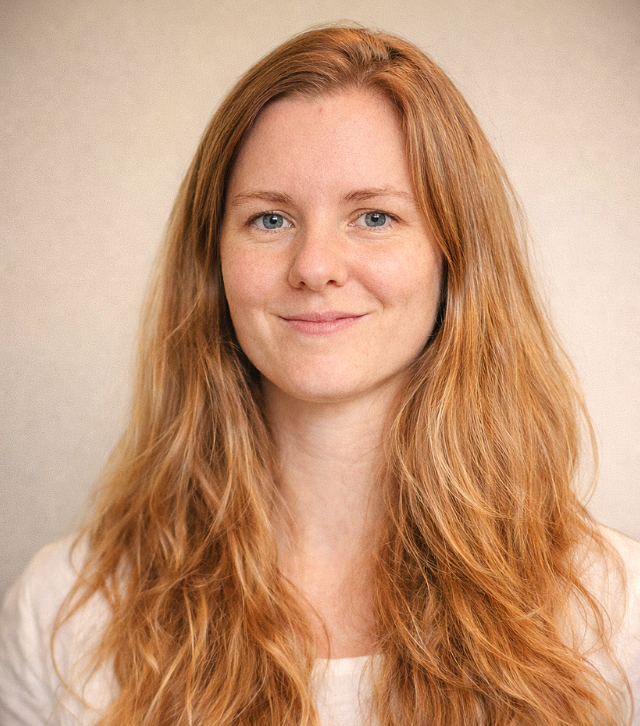
Amelia Couldrey is a Principal Scientist in the Seabed Processes Team at HR Wallingford, working on engineering and scientific problems connected with offshore infrastructure. Their role combines technical analysis, coding, GIS, project management and client work, with projects ranging from bridge scour to offshore wind. For readers interested in applied ocean science, the profile shows how an oceanography background can lead into commercial science and engineering.
Profile snapshot
Role: Principal Scientist at HR Wallingford
Organisation type: Private company
Country / region: UK / Europe
Role type: Researcher
Focus areas: Renewable energy, Engineering, Oceanography, GIS and mapping, Modelling
Jump to
Your current role
What is your current role and what kind of organization do you work for?
My current title is “Principal Scientist” and I work within the Seabed Processes Team, which sits within the larger Coasts and Oceans group at HR Wallingford. HR Wallingford is a very unique company – it doesn’t have shareholders and so all of the profits are maintained by the company and put towards research. As a result, the company sits somewhere in-between academia and commercial.
My role entails both engineering design work for offshore infrastructure – such as windfarm foundations, cables and crossings, as well as supporting operations and remedial works.
What does a typical week look like?
I have a hybrid working pattern, so I’m in the office Tuesdays and Wednesdays and work from home the other days; although we have a lot of flexibility so I often swap the days to fit in around things outside of work. The majority of my work is desk-based, though I did “cut my teeth” working in the labs when I first started here (now 10 years ago!). Unlike some consultancy companies, most scientists and engineers here are involved with projects from start to finish, which means we’re all involved with liaising with clients, writing proposals, reviewing contracts, project management etc. I would say about 70–80% of my day is technical work comprising manipulating data, coding, GIS, creating figures and report writing. The work is really varied and we work with clients across the globe – so one moment I might be predicting scour at a bridge in the US and the next I might be designing scour protection for a windfarm in Taiwan. Typically we have a few projects on the go, so over the week we’re required to wear a few different hats.
What skills do you use most often in your role, including any technical, practical, or soft skills?
For technical skills I do a bit of coding (sadly I was brought up on MATLAB and my Python skills aren’t quite up to scratch yet, but as a team we work across both at the moment) and GIS (again, we utilise both Arc and Q). For all of our report writing and presentations we use the Microsoft suite. More generally, just being a bit computer-savvy is very useful.
I would say that even though I’m not in a leadership role, my job requires a good degree of people skills – both being able to delegate and support others. Since a lot of the work we do isn’t “off the shelf”, I think those that succeed the best are typically people who are curious, enjoy problem solving and can work well both independently and as part of a team. A lot of my time is spent contacting clients, so being able to remain professional but also understand your client’s particular needs is a valuable skill.
Every job has a best part and a worst part. What are they for you?
The best part of my job is how varied the work is. I find it easy to get excited about going to work since I know that I will be challenged and have to work creatively to solve problems.
The worst part is that the work in offshore wind has exploded over the last couple of years and we can barely keep up with the work coming in, which is both a great thing for the world and meeting emissions targets, and a challenging thing for our relatively small (but growing) team.
What does this job demand of your schedule or lifestyle?
My contract is for 37 hours a week. We have core hours that we must be working during (unless we book them off) and then the rest of the hours have to be performed within a larger window each day. This allows for a lot of flexibility when fitting in appointments or engineer visits at home etc. If I accrue additional hours then I can spend these to take time off another day. The system seems to work really well, allowing for a life that’s less interrupted by work (and equally a job that’s not interrupted by life).
Your route into this work
How did you get into this work, and were there any key opportunities, decisions, or turning points along the way?
I was studying Oceanography at Southampton Uni and towards the end of my four-year master’s degree I was looking for ways to extend my time there as I was really enjoying myself. I spoke with a lecturer, whose course I really enjoyed, about collaborating on a PhD and they said yes. During my PhD I was fortunate to attend a conference in Australia where I met my now manager. Serendipitously, a job opened up at the company right when I was finishing my PhD.
Going back to the beginning, I think I found out a lot about myself and what future roles I was/wasn’t suited for through work experience. I was a bit of a keen-bean and I did four different work experience weeks. At that age I felt very unsure of my future and getting a taste of four different work environments really helped me to resolve this.
What education, training, or experience helped you get into this role?
I studied for a master’s in Oceanography before completing a PhD. I would say that a master’s degree is a requirement for my role, but the PhD is an added bonus. A surprising number of my team have PhDs but this is perhaps becoming more of a rarity with junior staff who are joining us at the moment.
Is there anything people think they need for this career that may not actually be essential?
Being able to scuba dive! Sadly none of our work involves scuba diving, although we do sometimes go on site visits but these are all above water.
Reflections and advice
What advice would you give someone interested in this kind of work, and where should they look for their first step?
Find your niche but remain open to learning other skills/topics. For my PhD I studied seabed processes at shipwreck sites, which may at first not seem related to offshore wind but many of the seabed processes are the same across both fields and more importantly, the skills to study the processes are interchangeable. By picking a specific topic to study that I enjoyed, I had a lot of fun during my PhD but I was still able to convert to working in the commercial environment because I developed a well-equipped toolbox of skills and knowledge.
What is one mistake, challenge, or lesson from early in your career that taught you something useful?
Being able to say ‘No’ is hard but crucial. You are in charge of your workload and it’s often difficult for others around you to see how much work you have going on, so it’s important to recognise when this is becoming too much and to let your team know. Equally, you can’t support others in your team if you yourself are struggling. So it’s important to make sure you’re in a good place before offering to help others.
Where do you see this field heading, and what opportunities does that create for newcomers?
Offshore wind is on the up, especially here in west Europe but there are many emergent markets e.g. Romania, Australia, Japan. I think there will always be a role for oceanographers, engineers and anyone else with a scientific background. However, I think we will be leaning on computational modelling a lot more in the future, so there will be more opportunities for mathematicians and those with programming skills. Floating offshore wind is taking a little longer to get going than we initially thought and whilst the foundations don’t require fixation on the bed, there is still a need for anchor points, cabling and substations, all of which will require similar studies and people with similar skill sets.
Is there anything else you’d like to say?
I have the privilege of serving as a trained Mental Health First Aider at work. One thing my experience has reinforced is that mental health challenges do not discriminate. They can affect anyone, regardless of role, seniority, or background.
If you notice someone who may be struggling, please take the time to check in with them. Equally, if you are finding things difficult yourself, please reach out to your manager, GP, friends, or family. You do not have to face these challenges alone.